
19.05.26
Converts: How Spectacular Demonstrations Fueled Decades-Long Intelligence Research
Read time: 18 minutes
This was for a university research project. It's a brief analysis of one of U.S. intelligence's strangest subprojects: using psychics for espionage.
It goes without saying but the story here is insanely complex and told over hundreds of declassified documents. I researched and wrote this essay over the span of a few weeks. All things considered, it's a very broad analysis. If you found this interesting, I strongly recommend researching it more yourself. There's a ton of cool stuff I just couldn't fit here (without rambling). Refer to the footnotes for a good starting point.
Also, the images essentially have nothing to do with the writing. They are just random diagrams I found during research that I thought looked cool. Besides, the images makes the document seem cooler to anyone just skimming it.
Somewhere amidst the crowd for a “Psychic Fair” in 1980s Montreal sat a small tent. Its interior was draped in dark fabric to muffle the noise outside, leaving the space lit only by the glow of two computer screens. Inside, attendees, motivated by the promise of a prize, sat focused on the flickering monitors. They were attempting a feat of the mind, using pure will or ‘volition’ to influence the random numbers generated by a machine. This was not a game. It was a private research project designed to see if human consciousness could influence the physical world in a measurable way.1 Despite its humble report, the data from this tent would eventually find its way into CIA archives. U.S. intelligence was monitoring the world of psychics.
This study, like many others, eventually entered a large CIA and Defense Intelligence Agency (DIA) collection of outside research on “parapsychological” phenomena. Between 1972 and the early 1990s, that collection developed alongside classified experiments conducted by government-funded institutions. Together, these archival and experimental efforts comprised the decades-long intelligence initiatives later known collectively as the “Stargate” program. Throughout its lifetime, the program operated under three primary mandates: determine the scientific legitimacy of psychics, explore the potential operational applications of such abilities, and assess whether the Soviets’ parallel program yielded any results or active threat.
Contemporary depictions of Stargate and other odd intelligence research often handwave motivations, presenting the agencies as intrinsically eccentric. The esoteric nature of this research has led to a caricature of the CIA as a shadowy cult: a weird organization focused on experimentation that begins apropos of nothing, as if these odd projects are inherent to its DNA. A cynic of the time may have asked why their tax dollars were being spent on such a strange wing of research. Others may have understood—what if the Soviets had a similar pile of papers? But to view the project solely through the lens of institutional eccentricity or even Cold War paranoia is reductive. In reality, the Stargate Project, under its many masks and stages, was still a deeply human endeavour. Stargate’s inception and momentum was not sustained by steady data. Instead, it was driven by the overwhelming psychological weight of singular, spectacular success stories. In a field plagued by statistical unreliability, a single ‘hit’ that seemed legitimate demanded curiosity. Many of the early researchers involved in Stargate were decorated physicists and scientists; they were not consumed by Cold War paranoia or by occultism. Stargate was a struggle to reconcile their professional skepticism with unexplained anomalies. The project’s lifeblood was the impossible demonstrations that felt too vivid to be a fluke, creating personal convictions that no amount of subsequent failure could fully erode.
Intelligence interest in psychics did not emerge in a vacuum. There has been a scattered history of government and military experimentation with mysticism. Such intrigue has ranged from several Nazi leaders consulting astrologists to alleged 1950s experiments aboard the Nautilus submarine, where individuals reportedly tested telepathy as a backup communication method while submerged.2 Prior to formal intelligence involvement, multiple private institutions around the world had already been researching parapsychology. Psychics had long been treated as worth investigating in various contexts.
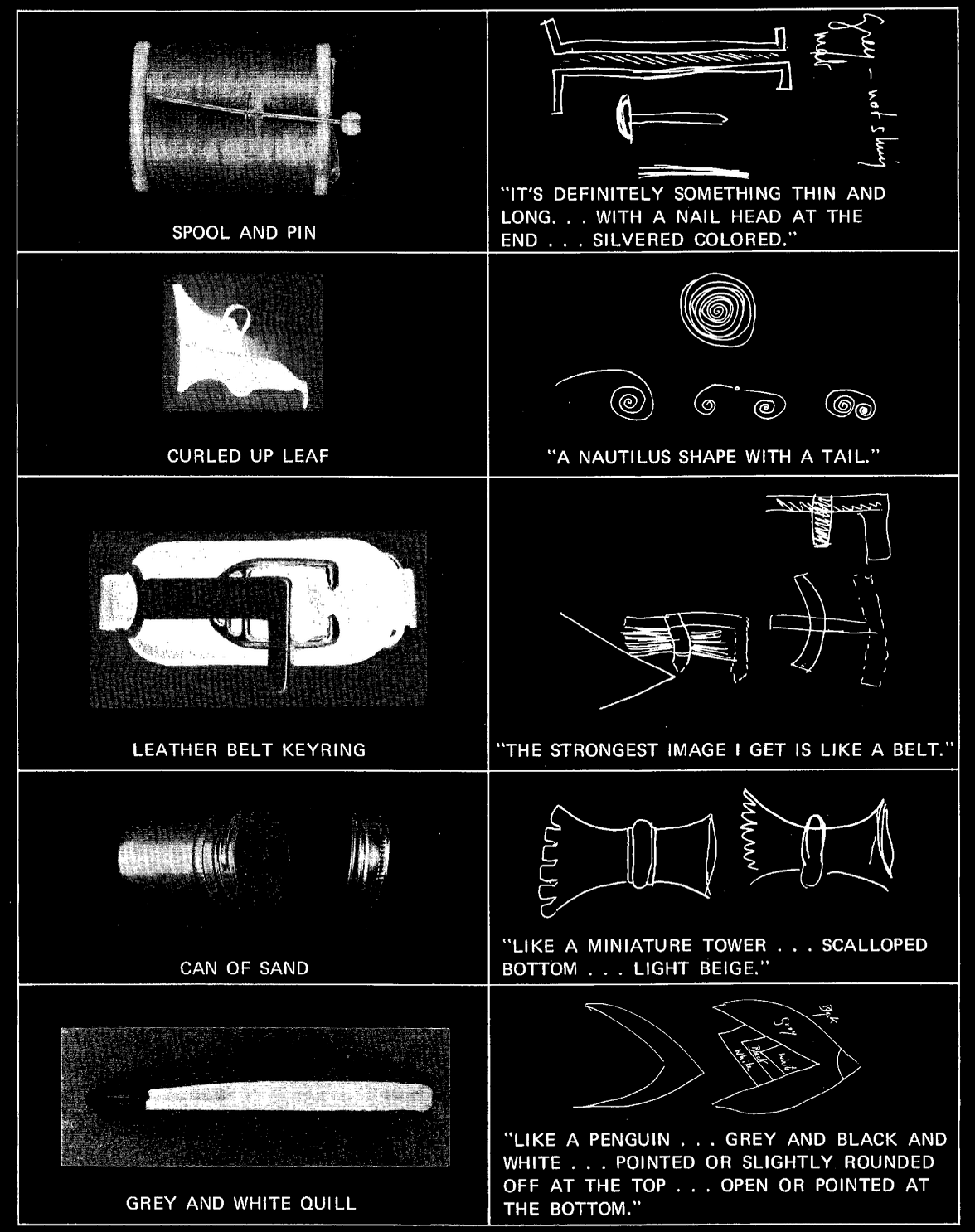
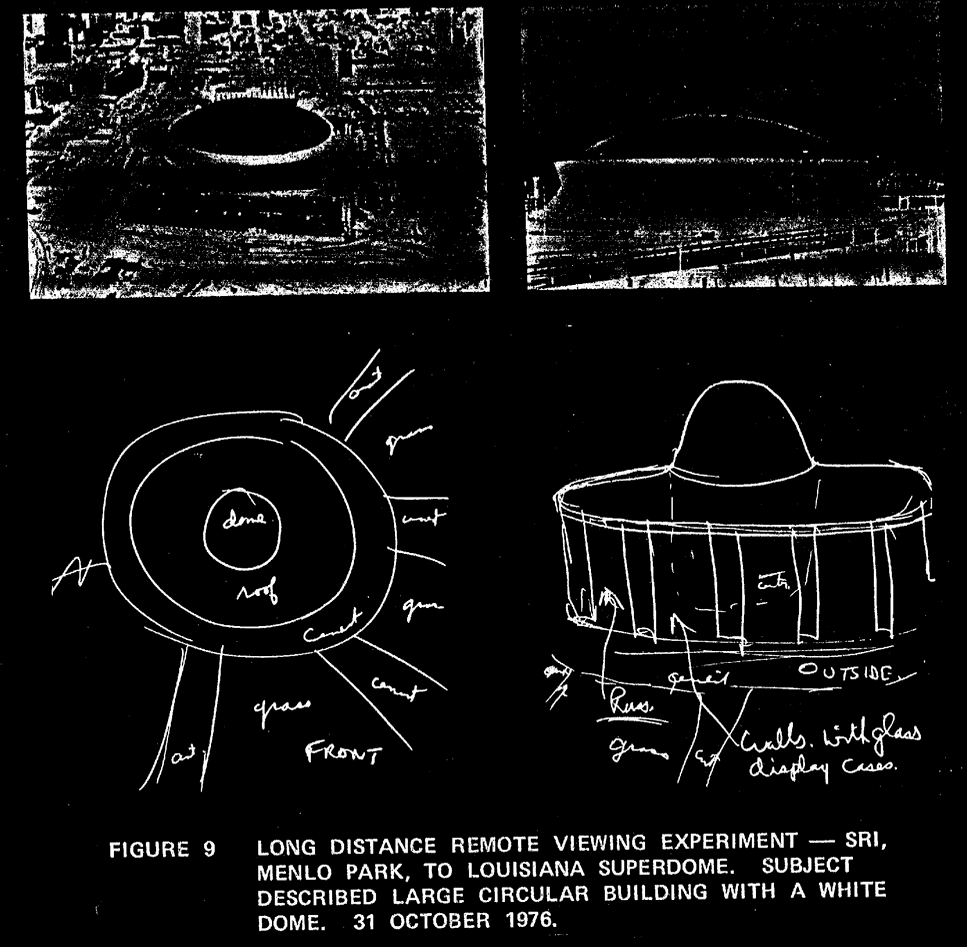
From this background, the definitive ‘start’ to Stargate came in 1972 with CIA-funded experimentation done at the Stanford Research Institute (SRI).3 The studies here focused on “remote viewing,” a sanitized term for clairvoyance: gaining information about places or objects via extrasensory perception.4 These experiments effectively aimed to create psychic spies. One of the most interesting methods from this experimentation was a “coordinate” method where psychic participants claimed to observe distant locations given only the latitude and longitude of a target.5 In fact, one subject of SRI research boldly claimed that he could “look anywhere in the world if you just gave [him] some coordinates.”6 This research, initially conducted by physicists Russell Targ and Harold Puthoff, focused primarily on three key individuals: Patrick H. Price, Ingo Swann, and Uri Geller.7
Research at SRI was not without controversy or opposition, however. More favourable criticisms described their work as aimless, without any explicit goal.8 Others highlighted methodological errors and weak scientific rigor.9 Despite this, multiple U.S. departments maintained interest in the field for decades after this research. Even with consistent doubts and an inability to scientifically replicate many of these experiments, their outcomes still attracted sustained interest. What was it about these experiments that warranted further investigation?
Many demonstrations of psychic phenomena are quite ostentatious. Even though scientific replicability was generally poor, when such demonstrations succeeded, the results were often fantastical. Skepticism was often ignored when results appeared unexplainable at the time. Consequently, many intelligence researchers and scientists reported developing a belief and interest in the phenomenon after a single successful demonstration. Ken Kress, a CIA analyst who presided over early tests with the Stanford Research Institute, described these events as “conversion experiences,” an incident that turns someone into a ‘believer’ in parapsychology.10
A particularly striking example of such a conversion experience occurred during a test involving CIA officer Kit Green and the psychic Pat Price. To ensure the test was “fraud-proof,” Green had removed himself from the equation entirely. He asked a colleague for a set of coordinates without asking what was there. When Green gave the coordinates to Price, neither of them knew anything about the target. As Price remote-viewed the site, he described a massive, high-security underground complex in startling detail. Green was baffled. He returned to his colleague to ask what was at the coordinates, expecting to hear about this strange facility. Instead, his colleague told him it was just the location of his private vacation cabin. At first, this looked like a total “miss.” But the details in Price’s sketches were too specific, and correlated with the description provided by another psychic at SRI. Curious, Green went to the location himself. He discovered that while the coordinates pointed to the cabin, just a short distance away sat Sugar Grove—a classified NSA facility. According to Green, not only did Price somehow know about the facility, but his description of its interior was also largely accurate.11
The start of SRI’s involvement with the CIA can also be linked to a similar conversion experience. During an early visit, one CIA officer improvised a test: he captured a small brown moth outside the SRI lab and sealed it inside a box. When asked to identify the contents, psychic Ingo Swann correctly described a “small, brown and irregular” object that resembled a leaf but was “very much alive” and moving. This startlingly accurate demonstration, performed under conditions that seemed to preclude trickery, was impressive enough to overcome institutional doubt. Two weeks after this demonstration, SRI was awarded a contract with the CIA for further research.12 Apparent ‘impossible’ results often motivated further investigation. These conversion events and awe-inspiring success stories are also a primary factor in how Stargate was sustained.
Keeping the project moving required impressing the right people. Generally, the goal was not to truly understand the phenomena, but to perform demonstrations that would inspire further research. At SRI, the work was almost purely exploratory. The focus of their research was on the validation and utility of psychic abilities, with little attention to how it actually worked.13 Furthermore, one declassified review suggests that SRI did not thoroughly investigate techniques such as the coordinate method. Instead, SRI treated the method as “functional” and focused solely on application, without examining its mechanisms, limitations, or alternatives.14 From this mindset, alluring or impressive demonstrations were often reported on, while others were ignored. Without a baseline goal or something to specifically prove, research drifted. It focused primarily on what was interesting rather than what was testable. As Kress described in a personal review, results from SRI were often “tantalizing but incomplete.” The data from these early years did not clearly prove or disprove the phenomenon, but it contained enough interesting results to warrant continued research.15 Kress, with frustration, also described how the people managing the project demanded “quick and relevant results,” regardless of actual scientific replicability.16 This pressure produced a recurring pattern: a single impressive event would spark a surge of inquiry and follow-up research, only for that event to be irreplicable. But intelligence agencies wanted something for operations; lengthy scientific investigations did not appeal to those demands as succinctly and directly as some impressive demonstrations.
This emphasis on spectacle was most clearly evident with Uri Geller. Before his time with SRI, Geller was already a well-known magician internationally. While he insisted his abilities were real, that certainly did not stop him from creating a show of it.17 His demonstrations started humbly at parties and theaters in 1960s Tel Aviv, but by the time he arrived in the US in 1972, Geller had cultivated a cult following and a lot of press, much to the dismay of the CIA operators trying to work with him covertly.18 When Geller began working consistently with SRI, he had already performed for the BBC and even on Carson’s Tonight Show.19 That showmanship carried into his demonstrations for SRI; when demonstrating his abilities to Puthoff, Geller was described as performing theatrical gestures and raising his fists to his temples.20
Despite Geller’s theatricality and the reputational liability he posed, SRI continued to devote substantial attention to him. SRI’s attention was not limited to a single sensational experiment; multiple reports document repeated sessions devoted specifically to testing Geller’s alleged abilities. In official language, SRI framed these sessions as efforts to verify Geller’s “apparent paranormal perception under carefully controlled conditions.”21 However, the prolonged interest in Geller can likely be attributed to the same kind of spectacular demonstrations that sustained the broader Stargate effort: he could produce vivid and seemingly impossible moments that drove fascination forward through otherwise ambiguous data. An anecdote recounted by Kit Green illustrates this clearly. During a call with Puthoff, Green was asked to open a random book in his office to a visually complex page and focus on it. The page Green selected had an illustration of the human brain, over which he had written the phrase “architecture of a viral infection.” From SRI, Geller reportedly drew what looked like scrambled eggs and stated that the word “architecture” was coming through strongly. For Green, the report was specific and unexpected enough to become another striking success story, precisely the kind of vivid hit that reinforced curiosity.22
By late 1975, another key figure joined SRI, physicist Edwin C. May. In his retrospective account, May recalled joining the SRI program as a consultant after receiving government clearance. Puthoff then introduced him to the project not through theory, but by opening a safe and showing him Price’s demonstration surrounding the Sugar Grove NSA facility. May remarked that what he saw “blew [his] mind” and still gave him “goose bumps” decades later. That demonstration served as another conversion experience. This astonishing success motivated May to pursue the research in earnest. In fact, May would later reflect that the same demonstrations that impressed him were those which “cemented the U.S. government’s commitment to the remote viewing programs for the next 20 years.” He would go on to become one of the main figures for the program through its later phases.23
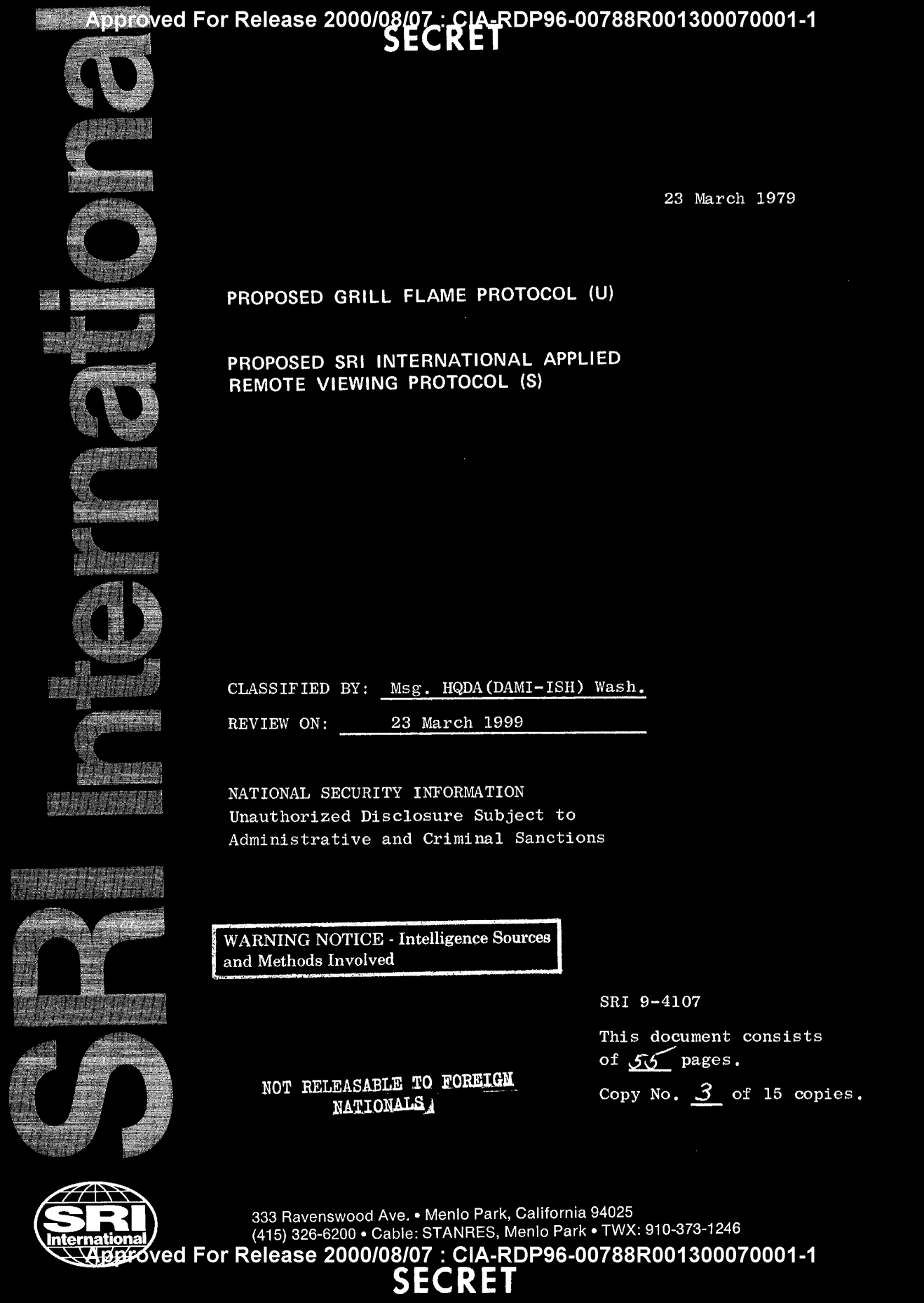
The CIA’s involvement with SRI wound down after several years of exploratory research, reportedly concluding in 1977.24 While the precise rationale for the discontinuation is difficult to establish, the timing suggests that institutional interest was not lost but redirected. Almost immediately, Army intelligence initiated Project “GONDOLA WISH” that same year, followed by the formalization of “GRILL FLAME” in 1978. These projects continued in the spirit of understanding and utilizing remote viewing, but now with a greater operational focus.25 SRI found itself with a new, albeit similar, client. By 1979, SRI was working directly with Army intelligence and had authored a proposed protocol to “familiarize Army and contractor personnel with RV procedures and [how] they apply to the location and identification of militarily significant targets” as part of the Grill Flame project.26 The phenomenon had moved beyond the exploratory into direct intelligence applications.
The expanding military interest did not translate into stable institutional confidence, however. May later noted that a substantial portion of his time was spent solely on securing continued funding. He estimated that “more than 40%” of his effort went towards keeping the research financially alive. Even when major contracts were awarded, that support remained fragile. May also described how a five-year Army contract in 1986 was cut in half by its third year and entirely vanished after the fourth.27 This instability was a significant factor in the project’s history. In an environment where funding depended on constantly persuading superiors, impressive demonstrations and compelling anecdotes likely carried far greater persuasive force than statistics and theories.
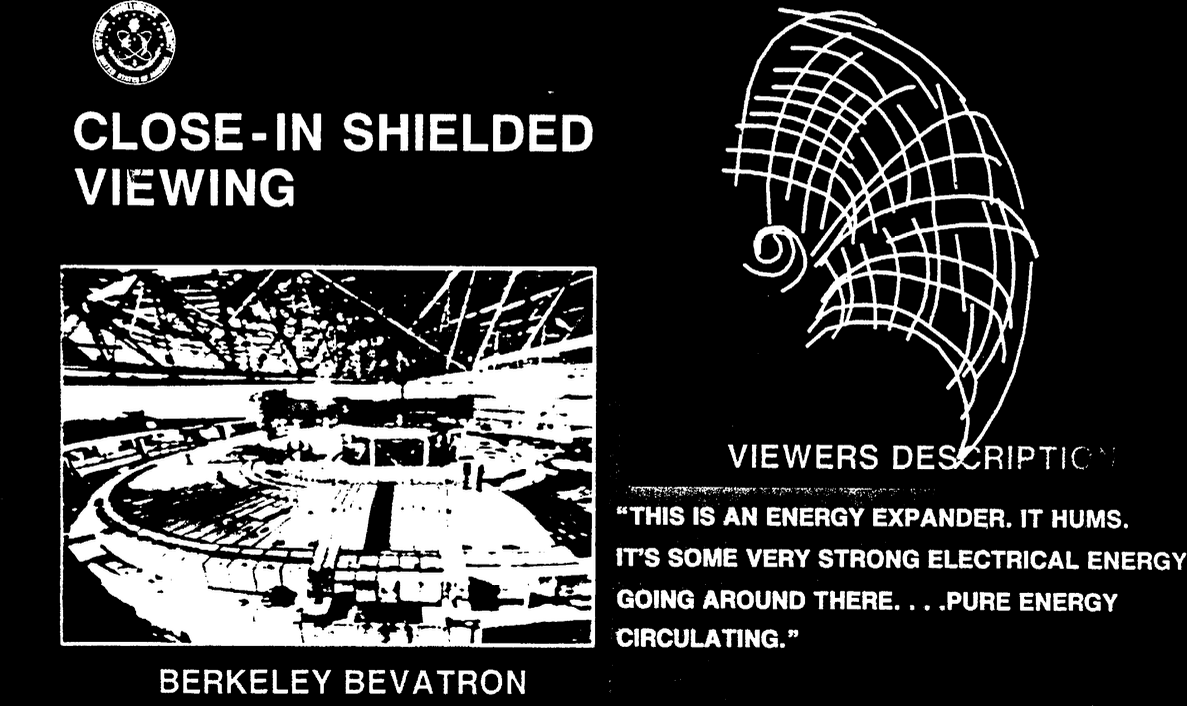
The same spectacular cases that kept funding alive also helped broaden institutional interest. By the early 1980s, interest in remote viewing had spread well beyond DIA and Army channels, with multiple agencies and military branches testing its utility. Budget and overview documents from the period show a large institutional footprint, with sponsorship from the Navy, Air Force, and several Army intelligence/research branches, including the Missile Research and Development Command (MIRADCOM) and the Intelligence and Security Command (INSCOM).28 These efforts ranged from ongoing laboratory research to explicit operational uses, suggesting that earlier successes had been persuasive enough to justify experimentation across multiple intelligence branches. Often, as May described, these sessions were treated as a method of last resort, a worthwhile option when conventional approaches had failed.29
Yet the breadth of this experimentation also made its limitations increasingly visible. Even under the generous assumption that remote viewing is real and accurate, its practical constraints became very apparent. By the early 90s, these flaws began to show. Stargate began to close once the spectacle faded and it became clear that the results were neither accurate nor informative enough to base important intelligence decisions upon. May’s reflection offers a clear illustration of one key limitation, using a submarine as an example:
A huge problem, then, was not just whether remote viewing occasionally produced compelling results, but whether those results translated into usable intelligence. Even if a session was extremely accurate (a fact that could not be validated during operations), the information could still be completely useless.
These concerns were later formalized in the 1995 American Institutes for Research (AIR) review commissioned by the CIA to determine whether the program should continue. This report had two primary focuses: determining whether the research itself provided strong evidence of the phenomenon’s existence and whether remote viewing could actually be used effectively for intelligence. Ultimately, the report determined that, even where statistically interesting effects existed, the program produced information that was too vague, inconsistent, and difficult to validate in real-time to justify operational use.31 In other words, by that point, the problem was not belief but risk—intelligence agencies could not responsibly base high-stakes decisions on information that could only be validated after the fact.
Beyond questions of intelligence utility, the AIR review also emphasized a deeper methodological problem: even where statistically unusual effects appeared, the underlying cause remained unsolved. The report noted that observed results did not, by themselves, establish a paranormal explanation and could not rule out alternative mechanisms.32 In this sense, the final review echoed issues that had persisted since the program’s earliest years. This problem was a consistent concern throughout a majority of SRI research and was mentioned in passing in discussions of methodology. For example, a 1974 SRI report on experiments with Uri Geller explicitly detailed efforts to eliminate any conventional queuing or information transfer by placing subjects (or experimenters) in shielded rooms and designing protocols intended to remove both “overt or subliminal” channels of communication. Yet even after these precautions, the report stopped short of identifying any underlying mechanism for the observed results.33 Instead, the experiments were still just demonstrations. Results primarily existed as grounds for further study, without any causal explanation. The question of what actually produced successful sessions remained unresolved. Without any clear indicator or cause, the phenomena remained operationally useless.
The lack of a clear causal explanation also made sessions difficult to evaluate in real time. Many experiments could only be validated retrospectively. Success was only established after the session, when output could be compared against a known target and interpreted.34 Without any reliable indicator for whether a given response was useful, any information gathered from remote viewing was incredibly risky and methodologically dubious. There was always the danger of generous interpretation; accuracy was often determined by how closely a description was judged to match the target after the fact. Such scoring is inherently subjective and vulnerable to apophenia. In an actual intelligence context, this rendered the information especially dangerous. Without independent corroboration, remote-viewing data was often little better than an informed guess.
A related concern also noted in both AIR and earlier SRI materials was the frequent use of immediate feedback during laboratory experiments.35 Specifically, one SRI report from 1978 detailed that it was “standard practice” to provide feedback during these experiments, arguing that it improved the subjects’ skills.36 Another report also observed that stronger results were obtained in the absence of openly skeptical observers.37 Such conditions, in conjunction with a lack of a defined “cause” for these abilities, raise the possibility that these repeated sessions could have been refining non-paranormal skills instead. At a minimum, feedback may have improved subjects’ confidence, guessing strategies, or inference skills. This makes it difficult to attribute the results to a uniquely psychic ability.
While the AIR report helped form the basis for Stargate’s closure, it did not settle the debate among its participants. In a published commentary of the AIR report, May framed the review as flawed and fundamentally incomplete. He argued that the evaluation considered too narrow a dataset, disproportionately emphasized negative findings, and failed to interview key participants of the program.38 More strikingly, May suggested that the report’s analysis was tailored to a predetermined conclusion. He theorized that the CIA had little interest in continuing to engage with the program as it had become politically and operationally difficult to handle.39
A central frustration in May’s critique was the AIR report’s failure to clearly define what constituted a successful use of parapsychology.40 Without an explicit standard for success, the evaluation remained ultimately interpretive, despite presenting itself as an objective assessment. This ambiguity cuts in both directions. If earlier researchers were vulnerable to persuasion by a handful of compelling demonstrations, then an evaluation lacking clear criteria risks the inverse problem: dismissing those same demonstrations without a consistent framework for what counts as convincing. What earlier participants saw as conversion experiences were, by the AIR review’s standards, insufficient. Without a defined metric for success, both the AIR report and these conversion experiences remain similarly subjective.
The trajectory of Stargate reveals a persistent tension between compelling experiences and institutional standards for evidence. Throughout its history, the program was driven forward by vivid demonstrations that seemed to defy chance and spectacular moments that sustained belief amid inconsistency. Yet these qualities ultimately limited its viability. Intelligence requires reliability before action, not interpretation after the fact. The AIR review and its criticisms reveal that the central issue was not simply whether something had happened, but how much those events mattered. Yet Stargate’s legacy was not limited to its institutional outcome. The extensive body of writing produced by participants after the program suggests that, regardless of institutional support, Stargate left a lasting intellectual and personal impact. Stargate did not resolve the question of remote viewing’s existence. Instead, it exposed a battle between what feels convincing and what can be reliably studied and utilized.
> Sources Cited
-
Mario P. Varvoglis, “A ‘Psychic Contest’ Using a Computer-RNG Task in a Non-Laboratory Setting,” n.d., CIA FOIA Electronic Reading Room, https://www.cia.gov/readingroom/document/cia-rdp96-00792r000700610001-3.↩︎
-
Annie Jacobsen, Phenomena: The Secret History of the U.S. Government’s Investigations Into Extrasensory Perception and Psychokinesis (Little, Brown and Company, 2017), 13-15, 19, 67-68.↩︎
-
Jacobsen, Phenomena, 9.↩︎
-
“SRI Studies in Remote Viewing: A Program Review,” 1 March 1984, CIA FOIA Electronic Reading Room, 1, https://www.cia.gov/readingroom/docs/CIA-RDP96-00787R000200090018-4.pdf.↩︎
-
“SRI Studies in Remote Viewing,” 2.↩︎
-
Ingo Swann, quoted in Harry L. Snyder and Arlene G. Snyder, “Summary and Critical Evaluation of Research in Remote Viewing,” 1 June 1979, CIA FOIA Electronic Reading Room, 8, https://www.cia.gov/readingroom/docs/CIA-RDP96-00791R000100440001-9.pdf.↩︎
-
“Russell Targ,” n.d., CIA FOIA Electronic Reading Room, https://www.cia.gov/readingroom/docs/CIA-RDP96-00787R000100220006-3.pdf;↩︎
-
“Proposal for Paranormal Research at SRI.”↩︎
-
“Summary of Known Remote-Viewing Experiments,” n.d., CIA FOIA Electronic Reading Room, 1, https://www.cia.gov/readingroom/docs/CIA-RDP96-00787R000500250015-6.pdf.↩︎
-
Jacobsen, Phenomena, 152-155.↩︎
-
Jacobsen, Phenomena, 141-147;↩︎
-
Jacobsen, Phenomena, 124.↩︎
-
Kress, “Parapsychology in Intelligence,” 5.↩︎
-
“SRI Studies in Remote Viewing,” 3.↩︎
-
Kress, “Parapsychology in Intelligence,” 7.↩︎
-
Kress, “Parapsychology in Intelligence,” 17.↩︎
-
Jacobsen, Phenomena, 86.↩︎
-
Jacobsen, Phenomena, 87, 128-130.↩︎
-
Jacobsen, Phenomena, 157.↩︎
-
Jacobsen, Phenomena, 131.↩︎
-
“Experiments – Uri Geller at SRI, August 4–11, 1973,” n.d., CIA FOIA Electronic Reading Room, https://www.cia.gov/readingroom/docs/CIA-RDP96-00787R000700110003-2.pdf.↩︎
-
Jacobsen, Phenomena, 134.↩︎
-
Edwin C. May, “Star Gate: The U.S. Government’s Psychic Spying Program,” Journal of Parapsychology 78, no. 1 (2014): 1–4, https://www.parapsychologypress.org/jparticle/jp-78-1-5-18.↩︎
-
Michael D. Mumford, Andrew M. Rose, and David A. Goslin, “An Evaluation of Remote Viewing: Research and Applications,” 29 September 1995, CIA FOIA Electronic Reading Room, 15, https://www.cia.gov/readingroom/docs/CIA-RDP96-00791R000200180006-4.pdf.↩︎
-
“[Timeline for Grill Flame],” n.d., CIA FOIA Electronic Reading Room, 1, https://www.cia.gov/readingroom/docs/CIA-RDP96-00788R001100020001-8.pdf.↩︎
-
“Proposed Grill Flame Protocol,” 23 March 1979, CIA FOIA Electronic Reading Room, 3, https://www.cia.gov/readingroom/docs/CIA-RDP96-00788R001300070001-1.pdf.↩︎
-
May, “Star Gate,” 3-4.↩︎
-
General Defense Intelligence Program, “Senate Appropriations Committee Congressionally Direction Action: Star Gate,” 15 March 1995, CIA FOIA Electronic Reading Room, 2-3, https://www.cia.gov/readingroom/docs/CIA-RDP96-00791R000300010003-2.pdf.↩︎
-
May, “Star Gate,” 9.↩︎
-
May, “Star Gate,” 3.↩︎
-
Mumford, Rose, and Goslin, “Evaluation of Remote Viewing,” 5-9.↩︎
-
Mumford, Rose, and Goslin, “Evaluation of Remote Viewing,” 8.↩︎
-
Harold E. Puthoff and Russell Targ, “Information Transmission Under Conditions of Sensory Shielding,” October 1974, CIA FOIA Electronic Reading Room, 2-3, https://www.cia.gov/readingroom/docs/CIA-RDP96-00787R000100220001-8.pdf.↩︎
-
May, “Star Gate,” 9.↩︎
-
Mumford, Rose, and Goslin, “Evaluation of Remote Viewing,” 138.↩︎
-
Harold E. Puthoff, Russell Targ, Edwin C. May, and Ingo Swann, “Advanced Threat Technique Assessment,” October 1978, CIA FOIA Electronic Reading Room, 44, https://www.cia.gov/readingroom/docs/CIA-RDP96-00788R001300040001-4.pdf.↩︎
-
“Experiments – Uri Geller at SRI,” 15.↩︎
-
Edwin C. May, “The American Institutes for Research Review of the Department of Defense’s Star Gate Program: A Commentary,” The Journal of Parapsychology 60 (March 1996), https://ics.uci.edu/~jutts/may.pdf.↩︎
-
May, “The American Institutes for Research Review,” 19.↩︎
-
May, “The American Institutes for Research Review,” 16.↩︎